
Buying & Selling Livestock for the First Time
A Practical Guide for New Producers
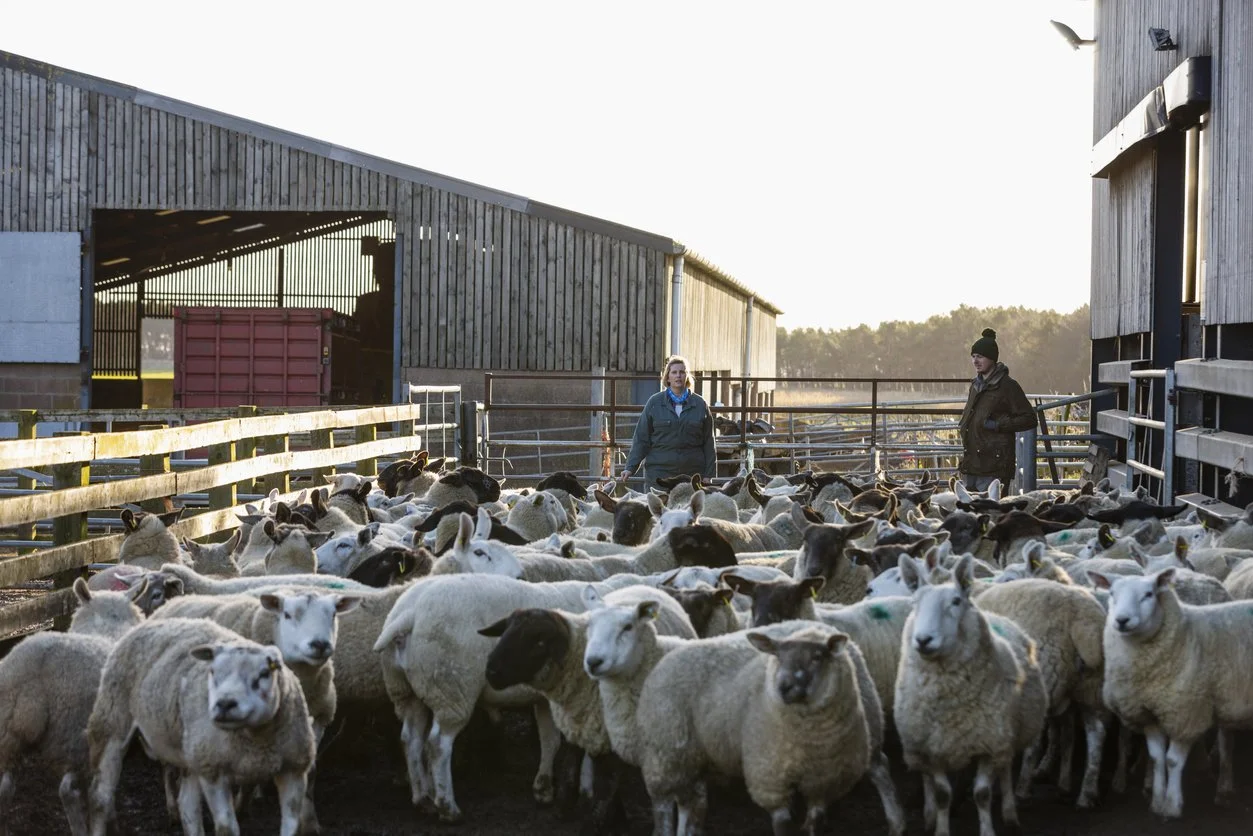
Stepping into livestock ownership — whether cattle, sheep or goats — is an exciting milestone for any new producer. But buying animals without a plan or clear market pathway can be costly, stressful and risky. Before you ever put a bid in at the saleyards or commit to a private purchase, one question should guide your decisions:
Who am I selling to — and does the animal I’m buying fit that market?
Choosing livestock is not about what looks good in the yard — it’s about purpose and profitability. Your market determines the type of animal you buy, how you manage it, how long you hold it and what returns you should expect.
Step 1 — Know Your Market Before You Buy
If you plan to:
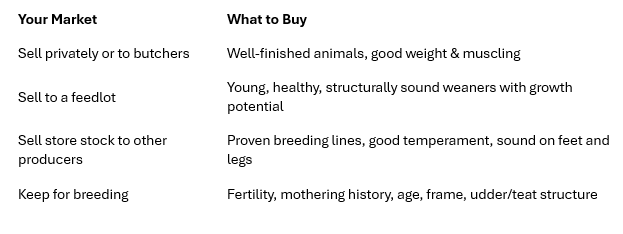
🔍 What to Look for When Buying Stock
Whether cattle, sheep or goats, always assess the following fundamentals:
Structure & Soundness
A well-framed, straight-backed animal with strong feet and legs will grow, walk, breed and finish well. Watch them move — stiffness, lameness or poor hoof condition are red flags.
Breeding History (if known)
For breeders, check:
Mothering ability
Past weaning success
Temperament
Fertility rates
For steers or wethers (meat production), genetics still guide growth and eating quality.
Age & Weight
Know the expected weight range for your target market.
Approximate benchmarks:
Weaners: 6–10 months old
Yearlings: 10–20 months
Prime animals: Suitably finished for slaughter
Buying oversized or undersized stock will impact feed cost, market suitability and timeline.
Animal Husbandry History
Ask for records of:
Vaccinations (e.g. 5-in-1 or 7-in-1)
Worming & parasite treatments
Weaning method (avoid bottle-fed unless prepared for extra work and risk)
Any previous illness, injury or treatments
Identification & Traceability
Every animal must have NLIS tags — no exceptions.
If it doesn’t, walk away.
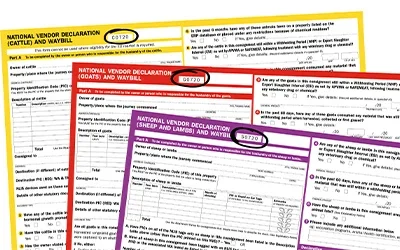
📄 Documentation — Don’t Move Livestock Without It
When buying livestock, you must receive either:
✔ NVD (National Vendor Declaration)
✔ eNVD
✔ Animal Health Declaration
Without this, you should not transport animals.
These forms protect you from disease and residue risks and prove legal ownership & movement.
Once you receive the animals:
🔹 Transfer them into your PIC via the NLIS database
This is the buyer’s responsibility — not the seller’s.
🔹 Keep all movement records
Audits rely on traceability, and good records protect your business.
Costs & Selling Pathways to Understand
Selling isn’t free — and different markets have different costs and expectations.
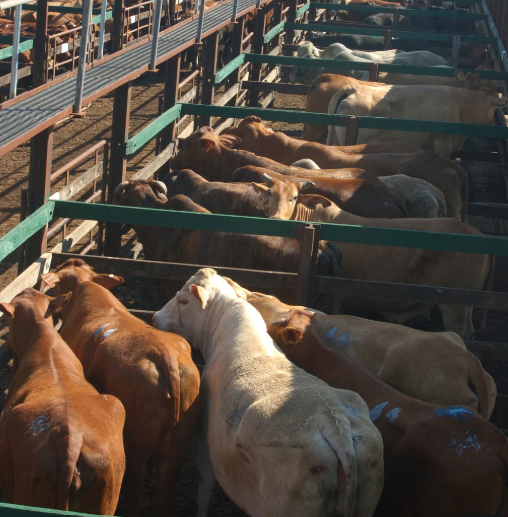
Saleyards
Yard fees
Agent commissions
Transport
Levies
Price fluctuation risk
Private Paddock Sales
Less fees
Requires negotiation and buyer relationships
Must still complete NLIS transfers & paperwork
Local Butchers / Abattoirs
Must meet carcass specs
Requires good finish and fat cover
Often prefer consistent supply
Feedlots
Prefer young, structurally sound, untainted animals
Weight range requirements apply
Vaccination programs may be required pre-entry
Visit your local saleyard even if you're not buying yet. Watch the market, ask questions, learn what sells well in your region and why. Local knowledge is invaluable. Some breeds thrive in particular climates; others do not.
Final Word for New Producers
Buying livestock is more than a transaction — it’s a strategy.
Set your destination before you start the journey.
✔ Know who you intend to sell to
✔ Buy animals that match that endpoint
✔ Keep strong records and meet compliance requirements
✔ Learn from local producers, agents and saleyard trends
Good decisions now mean better growth, better meat, better welfare — and better profits.
Kind Regards,
Amanda Burchmann
Livestock Production & Industry Development Specialist
Founder | Advocate | Producer
Phone: 0408847536
Email: amanda@jabagrisolutions.com.au
Disclaimer:
The information provided in this article is true and correct to the best of my knowledge at the time of publication. It is intended for general guidance and informational purposes only. Readers are encouraged to verify any information and seek independent advice relevant to their individual circumstances, particularly where legal, financial, or regulatory compliance matters are concerned.