Understanding Biosecurity: Why It Matters for Small Producers and Hobby Farmers
Whether you run a few head of cattle, a small sheep flock, or a mixed mob of goats on a hobby farm, biosecurity plays a vital role in your operation. In Australia, where livestock traceability and disease prevention are national priorities, biosecurity isn’t just a big-farm issue—it’s essential for every livestock owner, regardless of scale.
For small-scale producers and hobby farmers, good biosecurity protects your animals, your livelihood, and the reputation of Australia’s livestock industry as a whole.
What Is Biosecurity?
Biosecurity refers to the measures taken to reduce the risk of diseases, pests, and weeds being introduced or spread on your property. This includes:
Managing livestock movement
Quarantining new or sick animals
Controlling property access
Cleaning and disinfecting facilities and equipment
Record-keeping and monitoring animal health
Think of biosecurity as farm insurance: it’s far easier (and cheaper) to prevent a problem than to deal with the consequences of an outbreak.
Why Is Biosecurity So Important in Australia?
Australia’s livestock industry is one of the most disease-free in the world, which gives our producers a competitive edge in global markets. However, this reputation is fragile.
For small producers and hobby farmers, risks can be heightened due to:
Limited veterinary access or diagnostic capabilities
Informal or infrequent livestock transactions
Less familiarity with national requirements and systems
Close contact between livestock, families, and pets
Lower uptake of formal property or livestock planning
Many small-scale farmers don’t realise that by owning livestock, they have a legal and ethical responsibility to follow biosecurity and traceability protocols—even if they only buy and sell occasionally or run animals for personal use.
Biosecurity and the LPA Accreditation Program
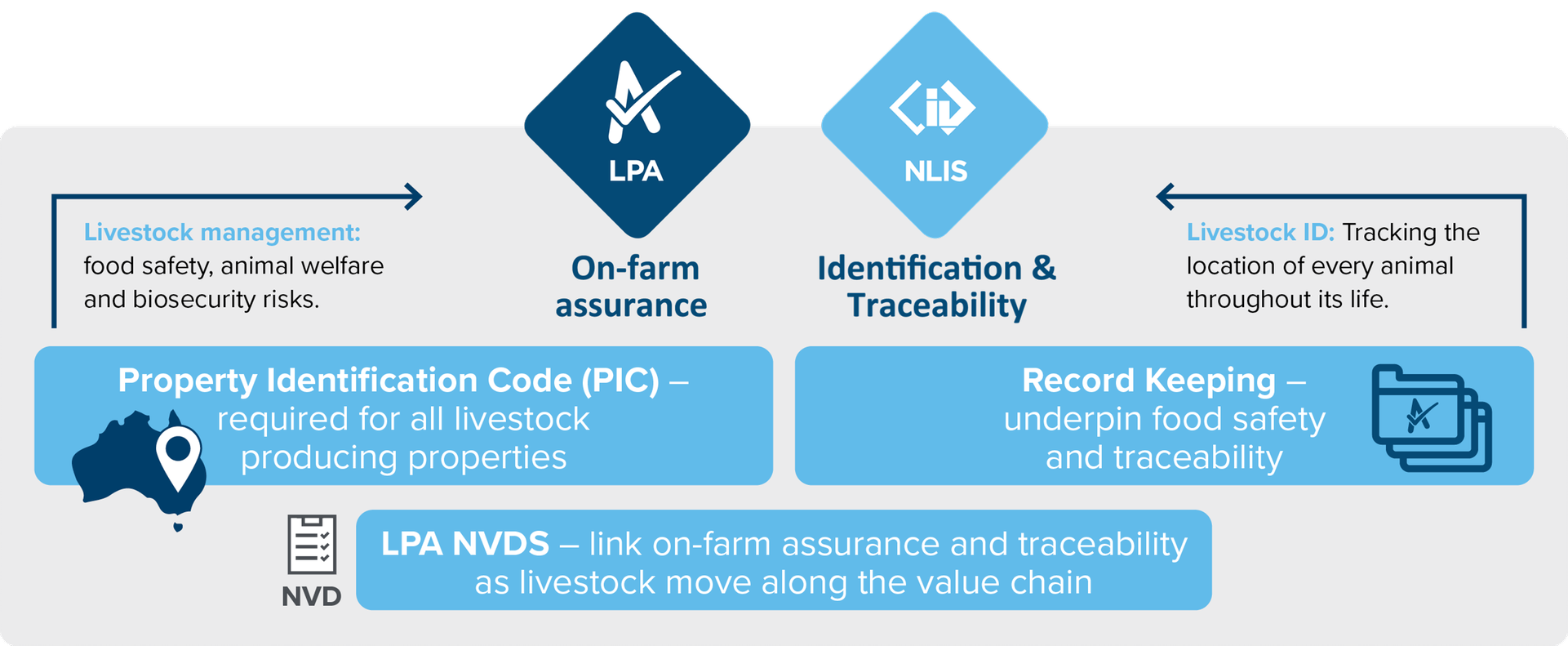
If you buy or sell livestock in Australia, you are strongly encouraged—and in most cases required—to be part of the Livestock Production Assurance (LPA) Program.
The LPA is an industry-managed accreditation program under the Integrity Systems Company (ISC), which ensures livestock producers meet food safety, traceability, and animal welfare requirements.
As part of LPA accreditation, you must:
Have a documented Biosecurity Plan for your property
Understand and follow animal welfare standards and complete the Animal Welfare Management Plan
Keep accurate records of livestock treatments, movements, and health
Use National Vendor Declarations (NVDs) when selling and moving stock
All livestock must be tagged with an eID tag or device prior to being transported
Participating in the LPA ensures your livestock can enter the supply chain with full traceability, protects market access, and demonstrates that you’re meeting your responsibilities as a livestock owner.
How You Can Contribute Positively
Even small, consistent actions can make a big difference. Here’s how you can strengthen biosecurity on your property:
✅ Quarantine new animals
Always isolate new or returning livestock for at least 7–10 days. Monitor for signs of illness and perform necessary treatments like vaccinations and drenching.
✅ Develop a biosecurity plan
Use the free LPA Biosecurity Plan template or get help from an advisor. It’s a requirement for LPA-accredited producers and a valuable tool for everyone.
✅ Maintain hygiene and control access
Limit who comes onto your property. Provide clean boots or footbaths, and ensure yards, tools, and troughs are cleaned regularly.
✅ Keep detailed records
Track treatments, movements, deaths, sales, and visitor logs. This helps you respond quickly in case of a disease event or audit.
✅ Talk to neighbours and mentors
Encourage other smallholders to adopt biosecurity measures and share knowledge. A community approach strengthens everyone’s protection.
Final Thought
Biosecurity isn’t just a checklist—it’s a mindset that protects your animals, your livelihood, and your community. Regardless of your farm’s size, you play a critical role in Australia’s livestock integrity system.
At JAB Agri Solutions, we’re passionate about helping small producers and hobby farmers become confident, compliant, and connected. Whether it’s supporting you through the LPA process, helping you write a biosecurity plan, or simply being your trusted go-to, we’re here to help.
Kind Regards,
Amanda Burchmann
Livestock Production & Industry Development Specialist
Founder | Advocate | Producer
Phone: 0408847536
Email: amanda@jabagrisolutions.com.au
Useful Links
Farm Biosecurity - https://www.farmbiosecurity.com.au/industry/lot-feeding/
LPA - https://www.integritysystems.com.au/on-farm-assurance/livestock-product-assurance/
NLIS - https://www.integritysystems.com.au/identification--traceability/national-livestock-identification-system/
Department of Agriculture, Fisheries & Forestry (DAFF) - https://www.agriculture.gov.au/biosecurity-trade/policy/australia?utm_source=chatgpt.com
MLA - https://www.mla.com.au/research-and-development/biosecurity/farm-biosecurity/
Animal Health Australia - https://animalhealthaustralia.com.au/better-on-farm-biosecurity/
Disclaimer:
The information provided in this article is true and correct to the best of my knowledge at the time of publication. It is intended for general guidance and informational purposes only. Readers are encouraged to verify any information and seek independent advice relevant to their individual circumstances, particularly where legal, financial, or regulatory compliance matters are concerned.