Understanding Supplement Feeding for Cattle, Sheep, and Goats
When to Feed for Maintenance vs. Nutritional Gain
Supplement feeding is one of the most important management decisions in livestock production. Whether you’re running a few head of cattle on a hobby block or managing a mixed grazing enterprise, understanding why, when, and how to supplement feed can make the difference between maintaining healthy animals and achieving productive weight gains.
This article breaks down the difference between supplement feeding to maintain health and condition versus nutritional feeding for performance and growth, across cattle, sheep, and goats.
Why Supplement Feeding Matters
Even with good pastures, there are times when feed quality or quantity declines — especially during dry seasons, winter feed gaps, or drought recovery. Supplement feeding ensures animals continue to meet their nutritional requirements for maintenance, reproduction, lactation, and growth.
Key goals of supplement feeding include:
Preventing weight loss during feed shortages such as winter and low rainfall months
Maintaining animal health, fertility, and immune function
Supporting rumen function and feed utilisation
Improving weight gain, milk production, or wool growth
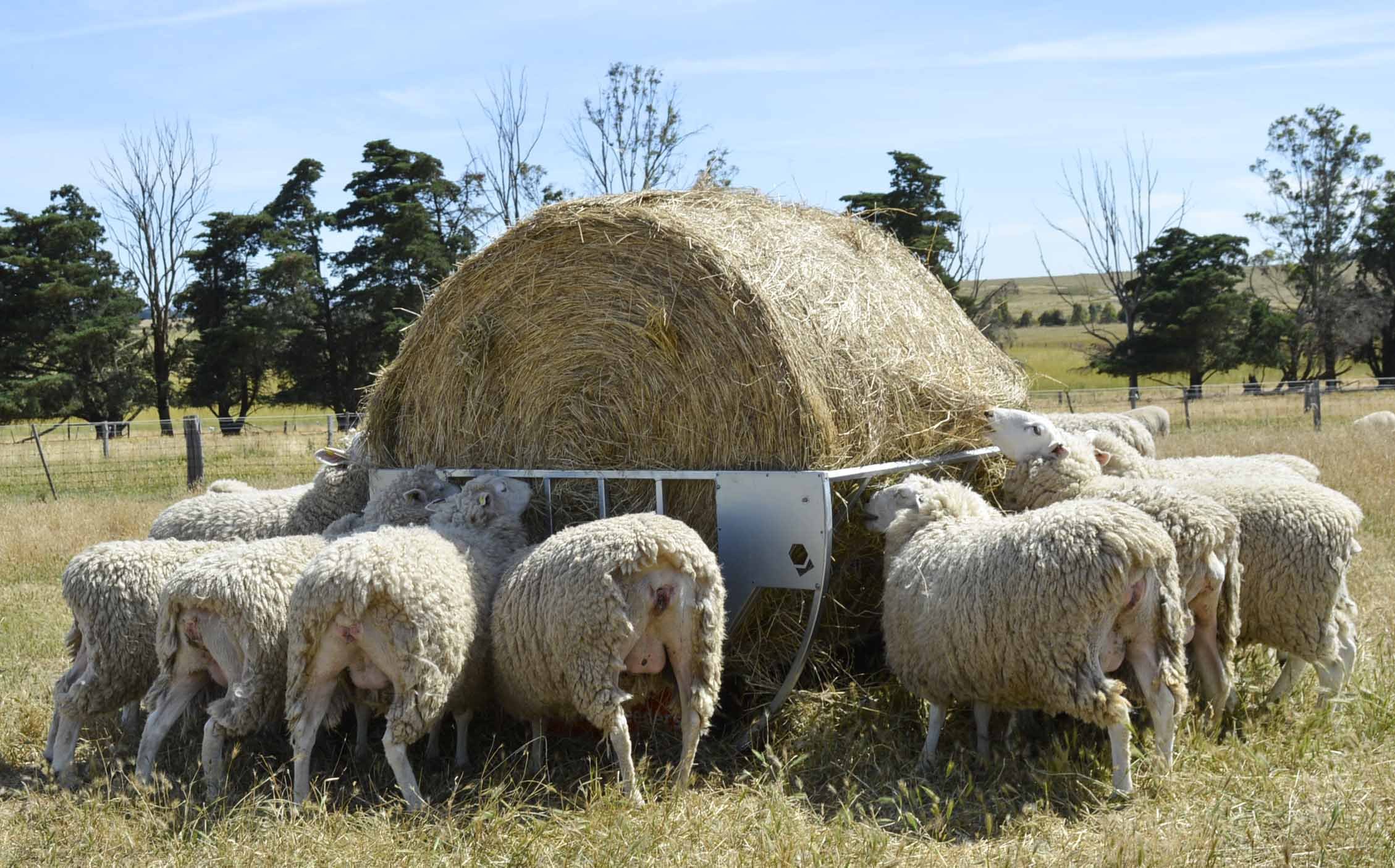
Maintenance Feeding: Keeping Animals Healthy
Maintenance feeding focuses on meeting the animal’s basic energy, protein, and mineral needs to maintain current body weight and health. It’s not about growth or production — it’s about survival and condition stability.
When to Implement Maintenance Feeding
Maintenance feeding is required when:
Pasture is scarce, dry, or low in nutritional value
Animals are losing condition due to energy or protein deficits
There are seasonal feed gaps, such as during winter or drought
Pregnant or lactating females need extra energy to maintain condition
Typical Feeds for Maintenance
Roughage sources: hay, silage, crop stubble
Low-level protein or energy supplements: urea blocks, lick blocks, or molasses-based mixes
Mineral and vitamin supplements: phosphorus, calcium, selenium, copper, and salt, depending on soil and pasture type
The aim is to keep the rumen functioning efficiently, not to promote rapid weight gain. Over-supplementing at this stage can waste money and even cause digestive upsets.

Nutritional Feeding: Driving Weight Gain and Production
Nutritional or performance feeding goes beyond maintenance — it’s about increasing weight, fertility, milk production, or growth rates. The focus here is on providing additional energy, protein, and balanced nutrients to achieve specific production targets.
When to Implement Nutritional Feeding:
Producers generally introduce higher-level feeding when:
Preparing animals for market or sale
Finishing cattle, lambs, or goats to reach a target carcass weight or fat score
Growing out young stock for replacement or sale
Supporting high-performing breeding or lactating animals
During recovery after illness or weaning, when animals need to rebuild muscle and condition
Typical Feeds for Weight Gain:
High-energy concentrates: grain mixes, pellets, or by-products (e.g., cottonseed, lupins, barley)
High-quality protein meals: soybean, canola, or lupins for muscle growth
Balanced rations: commercial feeds designed for cattle, sheep, or goats
Feedlot or controlled feeding programs where rations are carefully formulated
Nutritional feeding must always be introduced gradually to avoid digestive disturbances such as acidosis or bloat, particularly when feeding grains.
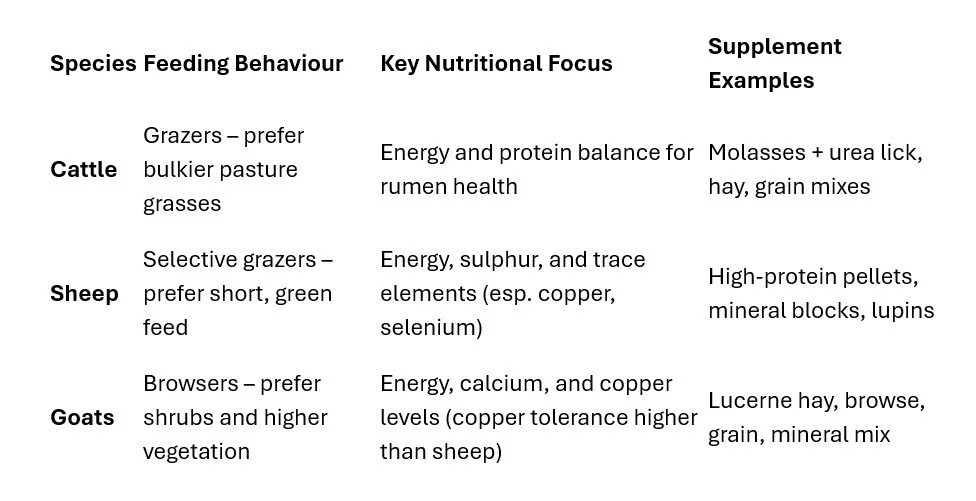
Understanding Species Differences
Although cattle, sheep, and goats are all ruminants, their feeding behaviour and nutritional needs differ.
Balancing the Ration
No supplement works in isolation. The base pasture or roughage must always be assessed first to identify gaps in:
Energy (MJ ME/kg DM)
Crude Protein (%)
Mineral and vitamin levels
From there, supplements are used to fill the shortfall — not replace the base diet. For example:
Low dry feed → add protein (e.g., cottonseed meal or urea lick)
Poor-quality hay → add energy (e.g., barley or molasses)
Limited minerals → provide targeted licks (e.g., phosphorus during wet season)
Feed testing and ration balancing software or advice from a nutritionist can help producers avoid under- or over-supplementation.
Monitoring and Adjusting
Regular monitoring of animal condition, weight, and manure consistency provides the best guide to whether the feeding regime is effective.
Key indicators include:
Body condition scores
Weight gains or losses
Coat and wool quality
Behaviour changes (e.g., increased grazing or lethargy)
Adjust feed quantities gradually and ensure adequate access to clean water — essential for digestion and feed utilisation.
Key Takeaways
✅ Maintenance feeding keeps animals healthy and stable during low feed periods.
✅ Understand your land type and pastures you have on your properyt.
✅ Nutritional feeding drives weight gain, milk, and reproduction when production is the goal.
✅ Always balance rations to pasture quality and introduce supplements slowly.
✅ Monitor condition regularly to ensure feed programs are cost-effective and safe.
✅ Each species — cattle, sheep, and goats — has unique dietary behaviours and mineral requirements.
Effective supplement feeding is not just about adding feed — it’s about strategic timing, understanding animal needs, and matching nutrition to goals. Whether maintaining herd health through the dry season or preparing stock for market, planning your feeding program is key to both animal welfare and business success.
Kind Regards,
Amanda Burchmann
Livestock Production & Industry Development Specialist
Founder | Advocate | Producer
Phone: 0408847536
Email: amanda@jabagrisolutions.com.au
Disclaimer:
The information provided in this article is true and correct to the best of my knowledge at the time of publication. It is intended for general guidance and informational purposes only. Readers are encouraged to verify any information and seek independent advice relevant to their individual circumstances, particularly where legal, financial, or regulatory compliance matters are concerned.